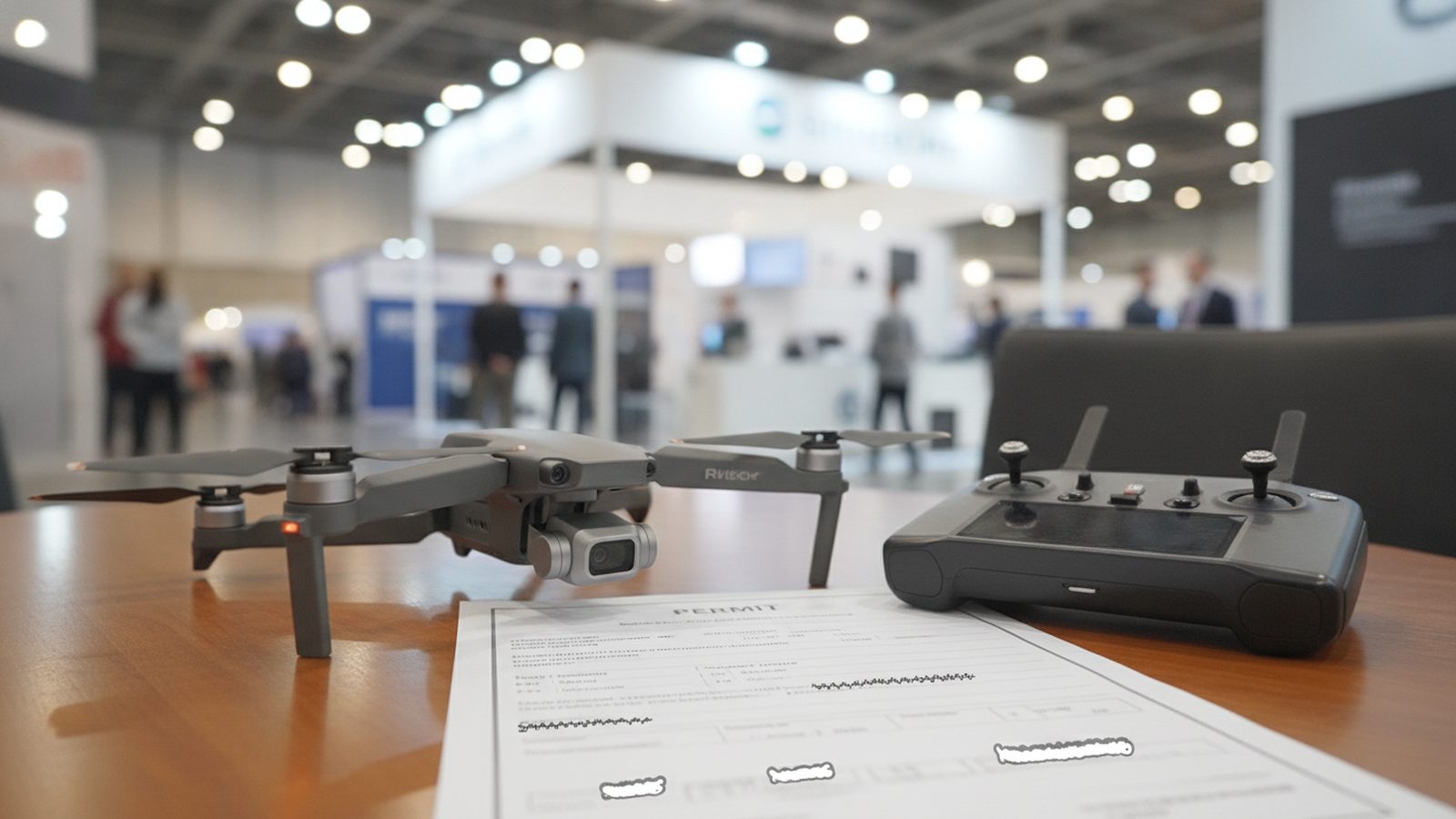
An aerial shot over your stand or the exhibition grounds makes any show film look bigger, so the question comes up often. This guide explains who decides, what a pilot needs in Germany and which alternatives give you the view from above.
All prices plus VAT · delivered within 24 hours · See all packages & details
When exhibitors ask for drone footage, they usually mean one of three pictures: the whole stand (booth) seen from above, a flight through the hall that ends at their own stand, or an exterior view of the exhibition grounds to open the show film. All three show scale and context, which a camera at eye level cannot.
Before you plan anything, ask which of these you actually need and where it will be used. An overview of your stand for the website or a post-show report can often be done without a drone. An exterior view of the grounds sometimes already exists in the organiser's press material. A flight through a full hall during opening hours, on the other hand, is close to impossible, because it would happen exactly where people are crowding.
So drone footage at a trade fair is not a standard shot. It is a special case with its own approval process, and knowing that early saves you a surprise on the build-up day.
Inside a closed exhibition hall, the organiser's house rules come first. Whether drones may fly, and under which conditions, is set out in the exhibitor manual or the venue regulations. If you cannot find anything, ask the exhibitor service in writing. A verbal yes does not help much when venue security steps in later.
Even with permission, a hall is difficult airspace:
Realistically, indoor flights only work outside opening hours: on the build-up day once the work is finished, early in the morning before the doors open, or after closing. Always with the organiser's approval and in agreement with your neighbours.
Outside, aviation law applies on top of the house rules. Germany follows the EU drone regulation plus national rules. For you as an exhibitor, the key point is that only a pilot who meets the requirements may fly. That usually means:
Flying over assemblies of people is not allowed in the open category, and a busy show entrance is exactly that. The grounds may also sit in a restricted zone, for instance near an airport. The official German map (dipul) shows whether that is the case.
If your team plans to bring a drone from home, check early: operators from outside the EU register in the first EU country where they intend to fly, and pilot certificates from outside the EU are generally not recognised. Hiring a local licensed pilot is usually simpler. Shows with large outdoor areas, such as InnoTrans in Berlin with its track display, still need the organiser's consent, because the grounds are private property.
If the drone shot really matters for your show, work through it in this order:
Coordinate the pilot's schedule with your photographer and videographer so the teams do not end up in each other's shots on the build-up day.
Many of the pictures exhibitors hope to get from a drone can be made another way:
At Pixer we look for such elevated positions for overview shots wherever the organiser allows access, and deliver photos and video within 24 hours after the show ends, usually with the first photos the same day. An aerial shot is a nice opener, but it rarely brings enquiries. Conversations, products and your team carry a show film much further.
No drone flies without the organiser's written approval, inside the hall or outside.
During opening hours halls and entrances are full. Flights belong in empty time slots.
Ask to see the pilot's registration, insurance and competence certificate in advance.
Non-EU registrations and certificates are generally not valid. A local pilot is simpler.
Build-up day, early morning or after closing are the realistic windows.
Galleries, stairs and upper floors often give the view from above without any approval process.
Only with the organiser's approval. Inside the hall the organiser's house rules apply, outdoors aviation law applies as well. Check the exhibitor manual and ask the exhibitor service in writing.
Check this early. Operators from outside the EU register in the first EU country where they plan to fly, and non-EU pilot certificates are generally not recognised. A local licensed pilot is usually the simpler route.
When hall or grounds are empty: on the build-up day after the work is done, early in the morning before opening, or after closing. During opening hours a flight over visitors is practically ruled out.
Agree this with the organiser in advance. Plan a secured flight area, for example with a net, and keep the approval on the stand. A demonstration inside a net also makes a good photo and video subject.
A specialist drone pilot with registration, insurance and a competence certificate. Coordinate their schedule with your photographer and videographer so the aerial shots fit the rest of the material.
From a height people are often not recognisable, but on low flights over a stand they are. Tell your stand staff and anyone present in advance, and do not single out anyone without consent.
Want the view from above, or mainly strong pictures of your stand? Send us the show, your stand and the shots you have in mind, and we will plan photo and video for your show day.
We reply within 24 hours. During a show week, WhatsApp is fastest.