A prototype on the stand, a customer project on a screen, a price list on the counter: trade fair photos can show more than intended. This guide explains in plain language how to plan, brief and review so that secrets stay secret.
All prices plus VAT · delivered within 24 hours · See all packages & details
Confidential does not only mean the covered prototype in the corner of your stand (booth). In practice, sensitive details end up in photos and videos in less obvious places:
This guide describes working practice from trade fair shoots. It is not legal advice. For the content of confidentiality agreements and questions of trade secret or patent protection, talk to your legal department or a lawyer.
The simplest tool is a short list everyone understands. Before the show, the product manager or another responsible person puts every exhibit into one of four categories:
| Category | Meaning | What the photo and video crew does |
|---|---|---|
| Free | May be shown in full | Photograph and film as normal |
| Overview only | Visible in wide shots, no details | No close-ups of labels, connectors or screens |
| Never in the picture | On the stand, but not for any image | Frame around it, or it stays covered |
| Embargo | May be shot, published later | Shoot, deliver separately, publish from the agreed date |
Mark the categories on the stand plan and in the shot list, ideally with a photo of each exhibit. Add the list to the briefing for stand staff and interpreters, so everyone works with the same limits. Name one person on the stand who decides in case of doubt. Your photographer should never have to guess.
If truly confidential products are on your stand, put the expectations in writing before the show. Many companies use their own non-disclosure agreement (NDA). In plain terms, such an agreement usually answers these questions:
Ask your provider before booking whether they will sign your NDA and how they handle files. Pixer, for example, works with a small crew on site and a remote editing team, so an agreement should cover both. Have the wording checked by your legal team. The general rules on usage rights for trade fair photos apply in addition.
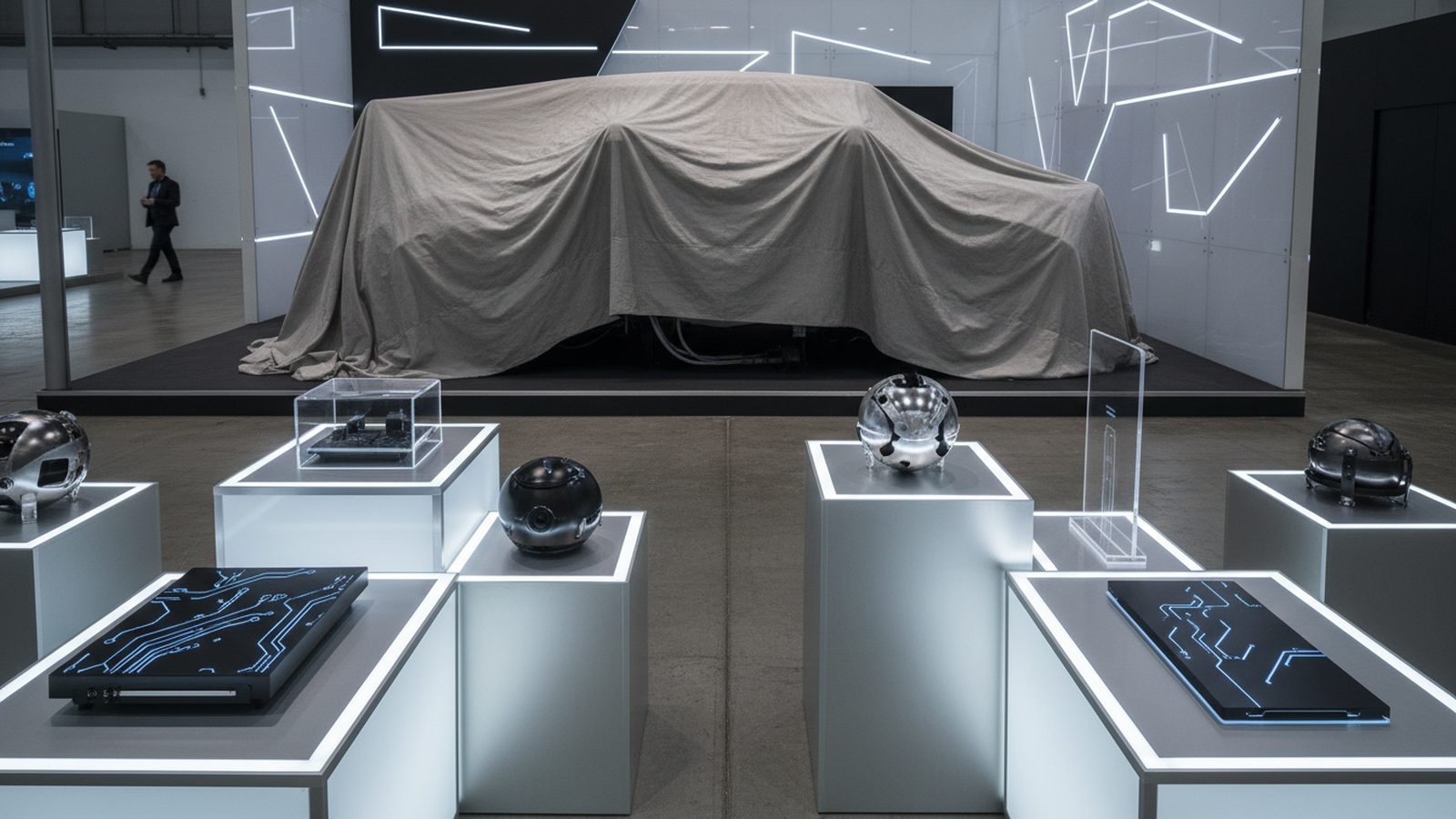
If a prototype is to be unveiled during the show, plan the reveal as a fixed moment: time, place, who removes the cover and where the camera stands. Until then the exhibit stays covered for everyone, including the crew's test shots. The unveiling itself is often the strongest picture of the day.
Visitors and other exhibitors carry phones too. You cannot control every picture taken in a public hall, which is why covering is more reliable than asking. Photo rules for visitors differ between shows and venues, so check the organiser's exhibitor manual. A small sign on a sensitive exhibit and a friendly member of staff usually achieve more than a discussion. The reverse applies as well: your own crew does not photograph confidential items on other stands, see other stands in the frame.
The last safety net is the review before anything is published:
Retouching can remove a label afterwards, but it is safer not to shoot it at all. For long-term storage, our guide on archiving trade fair photos shows a folder structure that keeps rights and status easy to find.
Free, overview only, never in the picture, embargo: marked on the stand plan.
One person on the stand decides whenever the crew is unsure.
An NDA covers crew, editors, file handling, portfolio use and deletion.
Covered or turned exhibits are safer than asking every visitor.
Neutral loops on screens, price lists and schedules out of sight.
Check every image zoomed in, use the revision round, respect the embargo date.
No. It describes practical steps from trade fair shoots. For the content of an NDA or questions of trade secret protection, speak to your legal department or a lawyer.
Not by default. If confidential exhibits are on your stand, a written agreement makes expectations clear for both sides. Ask before booking and have the wording checked by your legal team.
Yes. Agree an embargo date, ask for the material in separate folders and share the download link only with the people who need it.
Not completely. You can ask, put up a small sign and check the organiser's rules on photography. The reliable way is to keep the exhibit covered or out of sight.
Do not publish it. Flag it in the revision round so it can be retouched or the image removed from the selection.
Only if you agree. Put it in writing, including whether it is allowed at all and from which date.
Showing something that is not public yet? Tell us about restrictions and embargo dates when you enquire, and we plan the shoot around them.
We reply within 24 hours. During a show week, WhatsApp is fastest.