At a trade fair every frame is full of brands: partners, customers, neighbouring stands, the organiser itself. This guide explains in plain language when other logos in the picture are fine, when you need approval and how to prevent problems. Practical guidance, not legal advice.
All prices plus VAT · delivered within 24 hours · See all packages & details
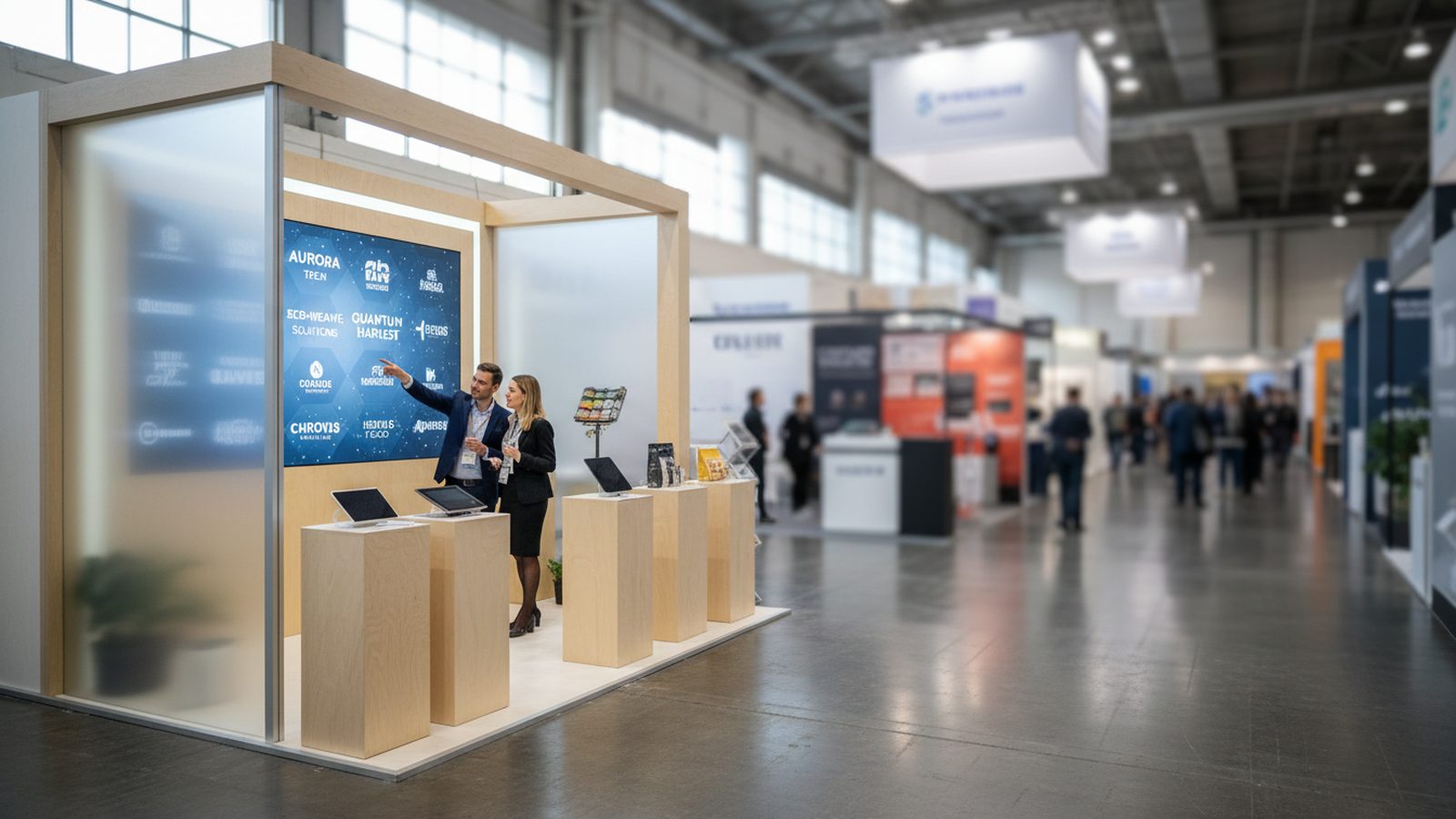
A show video presents your stand (booth), but rarely only your own brand. The frame includes logos of suppliers whose components sit inside your machine, customer names on a reference wall, neighbouring stands, the fair logo at the hall entrance and the manufacturer's logo on your sales director's laptop.
Three areas of law play a part, and the basics are worth knowing:
The good news: a logo that appears by chance in the background of a show overview is generally not a problem. What matters is how prominent the other brand is and what your video says about it. This guide is practical guidance, not legal advice. For binding answers, ask your legal team or a lawyer familiar with German and EU trademark law.
In practice, three levels help:
| Level | Example | Usual approach |
|---|---|---|
| Background | Neighbouring stand or hall signage out of focus in a wide shot | Usually fine |
| Context | A supplier's logo on a component inside your machine | Show it factually, do not feature it, check contracts |
| Leading role | Customer logo as a reference, partner logo in the end card, comparison with a competitor | Written approval or legal review |
German copyright law has a concept for this, usually translated as incidental inclusion: a work that appears only by chance in the background and could be swapped without anyone noticing is not a concern. Once it becomes part of what the image is saying, that no longer applies.
A common misunderstanding concerns freedom of panorama. In Germany it allows photos of buildings and artworks located permanently on public streets and squares. It does not cover temporary stands inside an exhibition hall. More in our guide to other stands and products in the frame.
If your product contains components from well-known manufacturers, the video may show your product as it is. It gets tricky when the video puts the other brand in the foreground or implies an endorsement. Many manufacturers have co-branding rules or partner programmes that set out logo use, colours and wording. Check your contracts before a partner logo goes into the end card.
A customer logo in your video says: this company works with us. That statement needs approval, ideally in writing and stating where the logo appears. Some customer relationships are confidential, in which case a reference wall on the stand is no licence for the video. The same applies to visitors with clearly readable company badges: a close-up at the meeting table can suggest a business relationship nobody has announced yet.
Distributors and sales partners often appear on your stand with their own logo. Agree before the show whether they want to be in the video and whether they may use the material themselves. How to prepare material for partners is covered in our guide to trade fair material for distributors.
A fair's name and logo are usually registered trademarks of the organiser. Exhibitors may of course communicate that they are taking part, for example with a line such as: visit us at the show. Many organisers provide logos, banners and usage rules for exhibitors for exactly this purpose. The rules differ from fair to fair, so check the exhibitor manual or the organiser's media area.
Avoid making your video look like an official video of the fair. The fair logo does not belong large in your title, and footage of the organiser's entrance areas, stages or press areas is not automatically cleared for your marketing. Filming outside your own stand is often subject to separate rules.
A video that shows your product next to a competitor's and claims advantages is comparative advertising. In Germany it is allowed under certain conditions, for example when it is factual, verifiable and does not disparage the competitor. Videos like this go to your legal team before publication.
Screens are easy to overlook. If a monitor in the background shows a football match, a TV commercial or someone else's video, you are pulling third-party content into your film. The same goes for presentations with other people's graphics. On your own stand, the monitors should show your own content while the camera is running.
One more point for exhibitors from China, Turkey, the Gulf or the US: trademark rights are territorial. A name or logo that is unproblematic in your home market may be registered to another company in the EU. That concerns your products first, but also the video that shows them.
At Pixer we ask in the briefing which logos should stay out of the picture, and we watch screens and backgrounds during the shoot. One more reminder: this text does not replace legal advice. For comparisons, campaigns with wide reach or any doubt about an approval, ask your legal team.
By chance and out of focus in the background, another company's logo is usually fine.
A customer logo claims a business relationship. You need written approval.
Check co-branding rules and contracts before a partner logo goes into the end card.
Show that you exhibit, but do not look official. The rules are in the exhibitor manual.
Other content on monitors pulls third-party rights into your video. Show your own.
A list in the briefing, a tidy stand and deliberate framing save time in the edit.
Generally not, as long as they only appear in the background and are not the subject of the shot. If another stand becomes the focus, choose a different framing or ask the exhibitor.
Only with their consent. A logo used as a reference is a statement about your business relationship. Get approval in writing and follow the customer's brand guidelines.
Many organisers provide logos and banners for exhibitors, with their own usage rules. Follow them and avoid giving the impression of an official fair video. The details are in the exhibitor manual.
Showing your product as it is is generally not a concern. Do not feature the other brand in a promotional way, and check whether your supply contracts say anything about naming it.
Take it seriously, have it reviewed legally and, if needed, replace the scene in a new edit. That is why it pays to keep project files and raw footage for a while.
Planning a show video and want other brands handled cleanly? Tell us the fair and the dates, and we will go through logos, screens and approvals with you in the briefing.
We reply within 24 hours. During a show week, WhatsApp is fastest.