A talk at a trade fair only reaches the people sitting in front of the stage at that moment. Recorded well, it becomes material for months. Here is what to clarify beforehand, how to secure picture and sound, and which edits are worth making.
All prices plus VAT · delivered within 24 hours · See all packages & details
There are two kinds of stage at a trade fair, and different rules apply to each. On a stage built into your own stand (booth) you decide on programme, times and recording, within the limits on volume and aisle space. On a forum stage run by the organiser you are a guest: technology, moderation and schedule belong to the organiser or a contractor.
For forum stages, clarify early:
These answers are rarely complete in the exhibitor manual. Ask the person responsible for the forum and get the confirmation in writing. General rules for photography on the fairground are summarised in photo permission at trade fairs.
Trade fair talks are short, usually 15 to 30 minutes, and the audience is restless. People come and go, and the hall carries on around them. That needs different preparation from a conference keynote.
If you are presenting in English to a mostly German audience, or the other way round, keep sentences short and slides visual. Send the slides to your videographer in advance so they know when the key moments come and can place them cleanly in the edit.
Three things decide whether a recording is usable, in this order: sound, the picture of the speaker, the slides.
Sound is the most common weak spot. A camera microphone picks up hall noise and the echo of the speakers. Much better is a feed directly from the mixing desk or a clip-on microphone on the speaker. Ideally you have both, so one covers for the other if something fails.
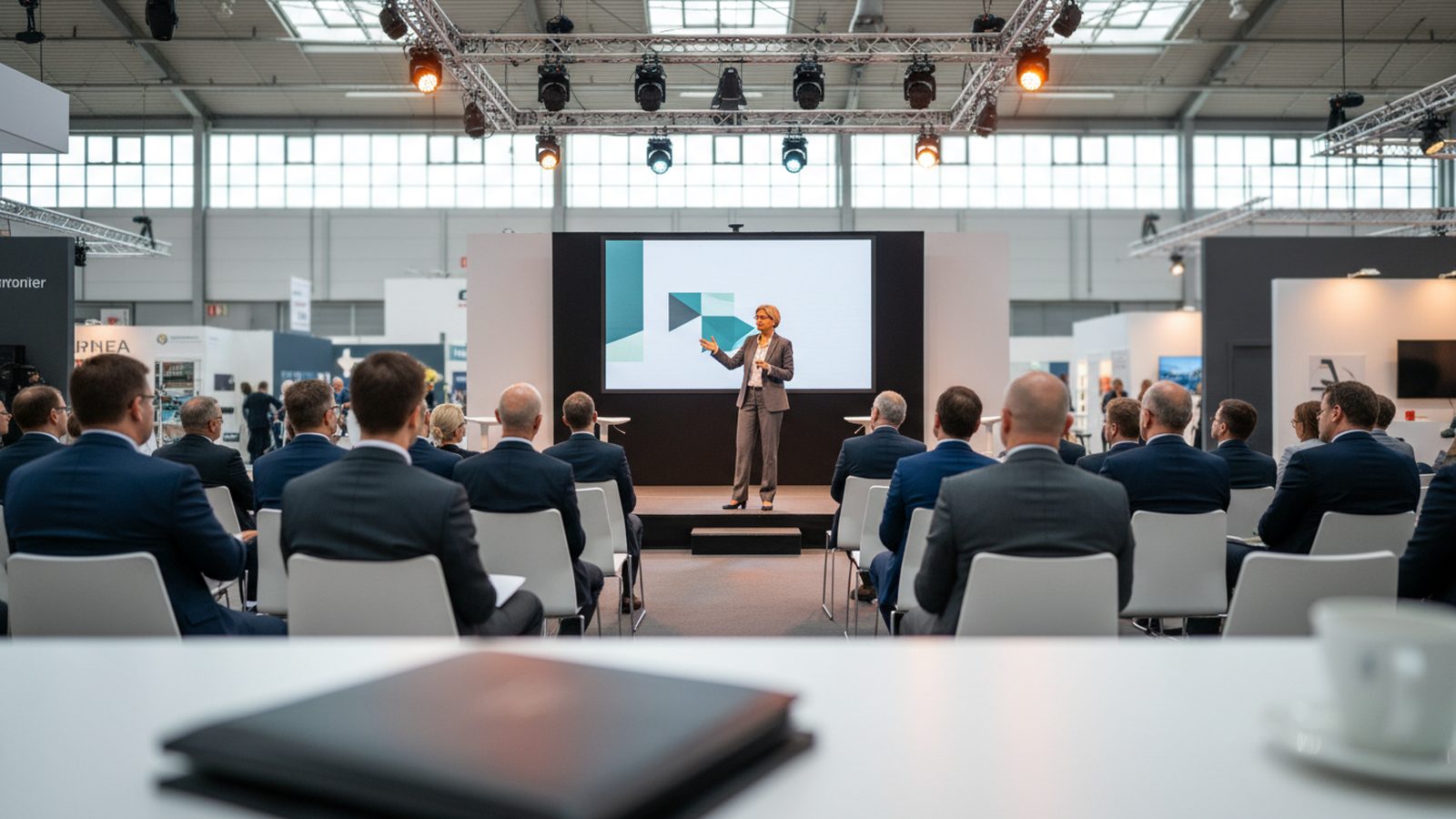
One camera holds a wide shot of stage, screen and speaker. A second camera frames the speaker closer. With two cameras you can cut a calm, varied video and you have a fallback when someone walks through the shot. Slides are inserted full-screen in the edit, ideally from the original file rather than filmed off the screen.
Forum stages usually have their own lighting, stand stages often do not. A speaker in front of a bright screen with no front light turns into a silhouette on video. On your own stage, plan a soft front light. Multi-camera setups are covered in more depth in recording conferences and keynotes.
A photographer alongside the video crew is worth it, because photos of a talk are among the most used trade fair images: for LinkedIn, the press release and the speaker profile at your next conference. Good talk photos show:
Flash disturbs speaker and audience and is unwelcome on many stages, so we photograph talks with the available light and fast lenses. At Pixer the photographer and videographer cover a talk together and agree positions so neither ends up in the other's frame.
One recording produces several formats. Decide in advance which you need:
Subtitles are essential because most social video plays without sound, and your audience at home may not share the language of the talk. We deliver subtitles in English, German, Arabic and Persian. How to plan multilingual versions is covered in multilingual subtitles for show videos.
A realistic schedule for a 20-minute talk on a forum stage looks like this:
Allow for the walk between your stand and the forum. In large halls it can take several minutes, and the stand team should know when speaker and camera crew will be away.
On organiser forums, confirm in writing whether and where you may film and whether you receive the recording.
Say it early and repeat it at the end. Many listeners stay only a few minutes.
Mixing desk feed plus a clip-on microphone. A camera microphone alone does not cope with hall noise.
One wide, one close. That gives a calm edit and a fallback.
Speaker with gesture, slide with logo, audience from the side.
Full recording, summary, vertical quotes with subtitles.
That is up to the organiser or the forum operator. Some record themselves and pass the file on, others allow your own crew with conditions. Clarify it in writing before the show.
For a simple recording, yes. For a varied edit and as a fallback when people walk through the shot, two cameras are better: one wide, one close.
Because only the camera microphone was used. It records hall noise and loudspeaker echo. A feed from the mixing desk or a clip-on microphone solves the problem.
Photos and short clips arrive within 24 hours after the show ends, the first photos usually the same day. A full recording with slides takes a little longer depending on length, and we agree the timing in advance.
Yes. We deliver subtitles in English, German, Arabic and Persian, and we can run the follow-up interview in those languages directly on camera.
If the talk and your stand photos fall on the same day, Professional with four hours at €1,490 often fits. For a full day with talk, interviews and a 90-second film there is Full Day at €1,990, both plus VAT where applicable. Multi-camera recording with stage sound is quoted on request.
Speaking at a German trade fair and want it recorded properly? Send us the show, the stage and the time, and we will sort out camera positions, sound and the edits you need.
We reply within 24 hours. During a show week, WhatsApp is fastest.