A journalist has 20 minutes, a creator posts while still on your stand. This guide covers how to book slots, what material to have ready and how to clear image rights and approvals in advance, so a visit turns into coverage.
All prices plus VAT · delivered within 24 hours · See all packages & details
At large trade fairs, trade journalists work to a tight schedule. They visit many stands in a few days and often decide before the show where they will go. If you wait for a chance visit, you will rarely be included. Creators and influencers work differently: they often post during the visit, and whatever they film is public immediately.
Both groups need the same things: a clear story in a short time, a competent contact person and material they can use without follow-up questions. All of that can be prepared. A visit that starts with a fixed slot, a spokesperson and a ready image selection is far more likely to become an article or a post that shows your brand correctly.
For international exhibitors there is a second audience: trade media in your home market that will not travel to the show. They still want to report that you exhibited in Germany, but they depend entirely on the pictures and text you send them.
Many organisers run a press centre or press service. Ask there whether you can leave press material physically or digitally, and whether there are press tours or media events your stand can be part of. The rules are in the exhibitor manual or on the fair's press page. If your spokesperson is more comfortable in another language, say so when you invite; some trade media can send a reporter who speaks it.
A digital press kit is usually enough today. Make it available through a short link or a QR code on the stand, and include:
Prepare the kit in English first, then add the languages of your key markets. Photos are often the bottleneck. Catalogue product shots exist, but current pictures from the stand are missing, and those are exactly what editors want for show reports. With Pixer, the first photos usually arrive the same day, so you can add stand photos to the press kit on the first show evening and send current material to editors at home while the show is still running. Which shots editors actually print is covered in Press release for the show.
For paid or commissioned collaborations, a short written agreement belongs before the show. It does not need to be long, but it should settle these points:
Think about your team and your visitors too. Creators often film spontaneously. Agree that people in conversation on your stand are not shown recognisably without their consent.
Around press and creator visits there are three kinds of material, and each raises different questions.
What your own photographer shoots, you can pass on if the usage rights allow it. Pixer grants unlimited usage rights, so you may also give the pictures to editors and distributors. Decide whether and how a photo credit should appear.
For recognisable staff, visitors and guests, personality rights and the GDPR apply at German fairs. Get consent in advance, especially for portraits and interviews. More in Image rights at trade fairs.
What editors and creators record belongs to them. You generally cannot demand approval of an article from a journalist, although you can ask to check quotes. If you document a press interview yourself and want to post the photo later, ask the journalist first.
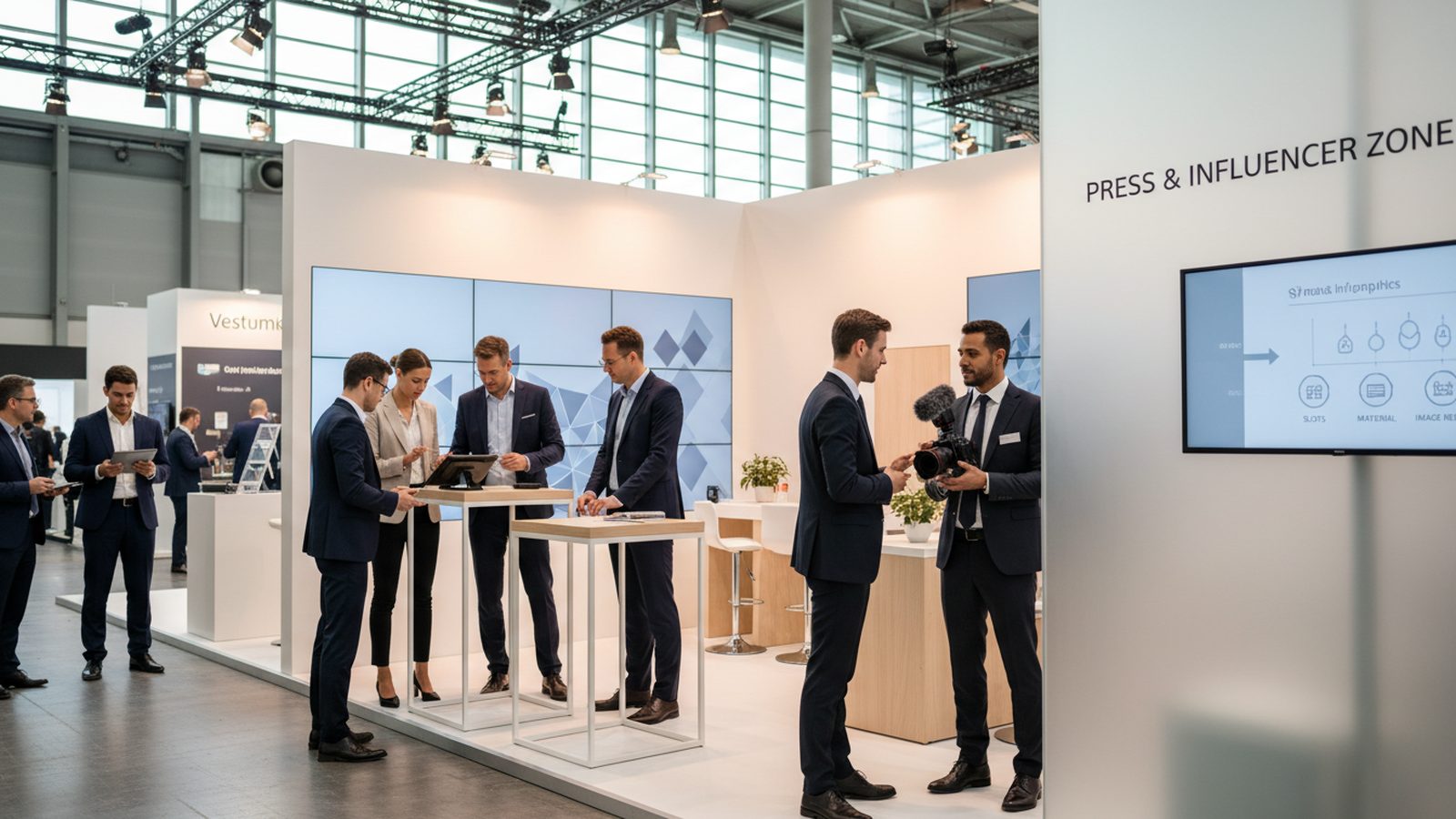
A photo of your managing director being interviewed by a trade magazine, or a short clip of a creator visit, is valuable for your own channels and for the team back home. Add press and creator slots to your photographer's schedule. On a busy stand (booth), the photographer works in the background, does not interrupt the conversation and takes one or two situational shots. The Full Day package covers an entire show day including interviews, and we record and subtitle in English, German, Arabic and Persian. Packages are on Trade fair photographer Germany.
Invite editors and creators a few weeks ahead with topic, stand number and time slots.
One person authorised to speak for the company, plus one for product details.
Press release, three to five current photos, logos, data sheet and contact via QR code.
Content, scope, approval, disclosure and reuse, agreed in writing.
Your own pictures with clear usage rights, consent for recognisable people.
Same-day stand photos let editors who did not travel still cover your show.
A few weeks before. Trade journalists usually plan their stand visits in advance. State the topic in one sentence, give hall and stand number and offer two or three concrete slots.
A short press release, three to five current photos with captions and rights statement, logo files, a spokesperson portrait, a product data sheet and a contact. A digital version via link or QR code is usually enough.
If your usage rights allow it, yes. Pixer grants unlimited usage rights. For recognisable people in the picture, you should have consent.
Generally not. You can ask to check quotes. That makes it all the more important to provide key messages and facts in writing in the press kit.
Content, number and timing of posts, the approval process, disclosure as advertising and whether you may reuse the posts yourself. Put it in writing.
Yes. The first photos usually arrive the same day, so you can send current stand pictures to editors at home that evening. Full delivery follows within 24 hours after the event ends.
Press meetings or creator visits planned? Send us the times, and we will schedule the shoot so current stand photos are ready for your press kit.
We reply within 24 hours. During a show week, WhatsApp is fastest.