Your stand team appears in almost every show photo. For the images to stay usable through the years and through staff changes, you need voluntary consent, clear purposes and a rule for when people leave. Practical guidance, not legal advice.
All prices plus VAT · delivered within 24 hours · See all packages & details
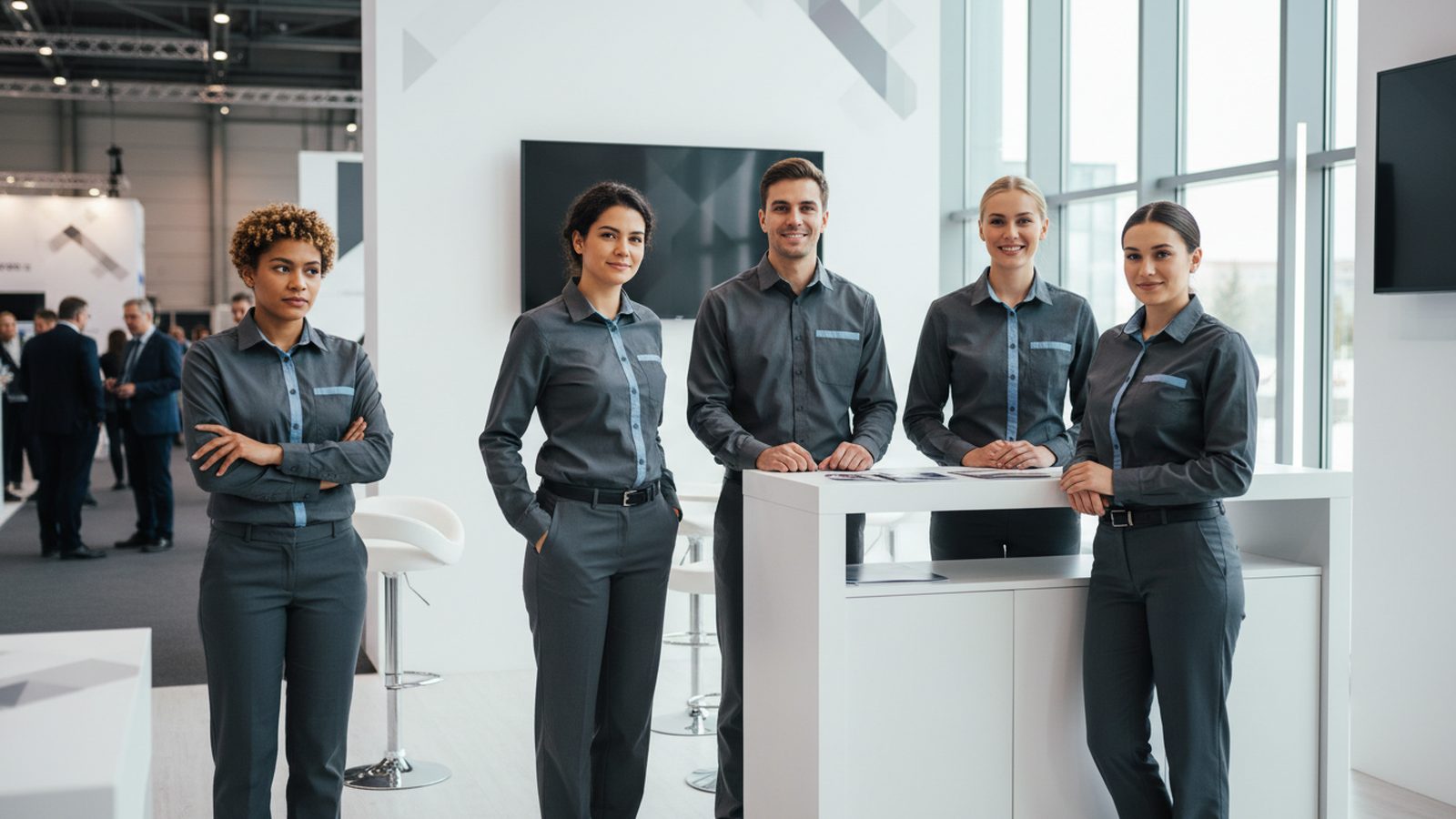
On trade fair photos your staff are not the backdrop; they are the subject: talking to customers, demonstrating a product, lined up for the team photo. These pictures end up on your website, on LinkedIn, in sales decks and in recruiting. Photos of employees are personal data too, and the right to one's own image applies at work just as it does outside.
The special point is the employment relationship. Because an employee depends on the employer, consent only counts if it is genuinely voluntary, and nobody may be disadvantaged for saying no. It is not enough to send people to the show and assume they agree to every use.
International exhibitors often bring a mixed team: staff flown in from head office, sales people based in Europe, hosts hired locally. Employment contracts may follow the law of your home country, but the pictures are taken in Germany and often used in the EU. The safe working assumption is to meet the European standard for everyone on the stand. This guide is practical guidance, not legal advice. Agree forms and rules with HR, your data protection officer and, if your German entity has one, the works council.
Remember people who are not permanent staff: trainees, working students, temporary workers, freelancers, hosts booked through an agency. For minors, such as trainees under 18, parents or guardians should agree as well. Collect consent before the show, not on the morning of the first day between the final stand check and the first customer meeting.
| Shot | Typical use | Recommendation |
|---|---|---|
| Wide shot of the stand, team in the background | Show review, website | Consent from the form, the team informed |
| Conversation photo with a customer | LinkedIn, newsletter | Employee's consent, customer as agreed |
| Team photo | Website, press release | Consent from everyone in it |
| Portrait | Team page, contact person | Consent plus the person's approval of the image |
| Employees in a recruiting video | Careers page, social media | Written consent, approval of the edit |
| Image for an ad or poster | Paid advertising | Separate written consent |
The more prominent and promotional the use, the more important a clear, separate agreement becomes. For getting the team photo right on your stand (booth), see our guide to the team photo at the trade fair.
There are many good reasons not to want to be photographed, and nobody has to give one. Plan for it instead of discussing it on the stand:
At Pixer we add these notes to the briefing and shoot accordingly. It is faster and more pleasant for everyone than retouching people out of pictures afterwards.
Sooner or later this question comes up in every company. Under the GDPR, consent can be withdrawn at any time with effect for the future. Under the German right to one's own image, by contrast, consent once given has traditionally been seen as revocable only for an important reason. How the two fit together is not fully settled. In practice, a clear rule agreed in advance works best:
Respect matters. Someone who explicitly asks not to appear on your website any more should not wait weeks for a reply.
A rule only helps if you can apply it later. For each image, your archive needs a few details:
With these details you can find every affected image quickly when someone leaves. More in our guide to archiving trade fair photos. For films in which employees are the focus, see our recruiting video service. Once more: this is not legal advice. Where works agreements or internal policies exist, they take priority.
Saying no has no consequences. Only then does consent count.
Not part of the employment contract, with tick boxes for each purpose.
Include trainees, working students, temporary staff and agency hosts.
People who do not want to be photographed are recognisable to the photographer.
Agree in advance: portraits removed, group photos as agreed, films edited to be replaceable.
Record who is in the picture, which consent exists and where it was published.
Better not. Consent in the employment contract easily looks like a condition of employment, and then it is questionable whether it was voluntary. A separate form is the clearer route.
Working on the stand and publishing photos are two different things. Whether and how images of an employee are published is usually settled through consent, not through work instructions. If in doubt, ask your legal team.
That depends on your rule. A workable approach: the photo stays in older posts and in the archive but is not used again. For the current website, plan a new team photo at the next show.
Yes. Under the GDPR, consent can be withdrawn at any time with effect for the future. New publications with that person are then no longer possible, and existing ones should be reviewed.
Yes. Directors and board members also have a right to their own image. They are often the face of the company, but their consent should still be documented, especially for the time after they move on.
Internal use is also processing of personal data. Name this purpose on the form so it is clearly covered.
Want your stand team photographed in a way that respects everyone's wishes? Tell us the fair and the dates, and we will build your notes into the briefing.
We reply within 24 hours. During a show week, WhatsApp is fastest.